Veltrixy
Nexus Library
Nexus Library
Couldn't load pickup availability
Self-paced learning overview
- 🧾 Digital file available after purchase
- 🗂️ Long-term availability
- 🔐 Secure checkout
- 📌 Content updated in 2026
1. Problem Statement
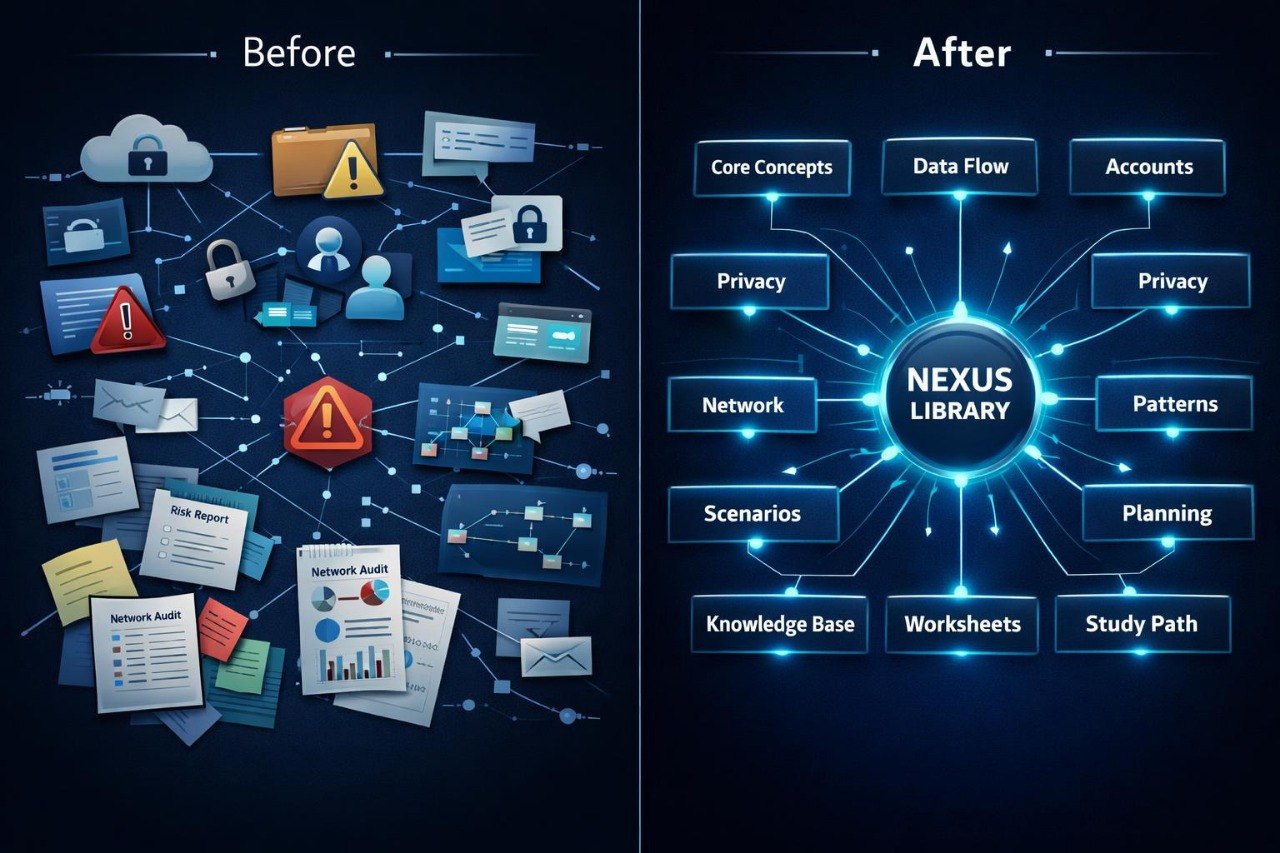
Struggling to connect multiple cybersecurity areas into one organized learning structure? You’re not alone. When there are more topics, learners may know separate ideas but still not see how they interact with each other. Data, accounts, privacy, network connections, messages, files, risk signs, and human behavior often form a complex picture. Without a convenient system of materials, it can be difficult to return to topics, compare scenarios, and notice repeated patterns. Nexus Library was created as a combined learning base where different areas are gathered into one structured space.
2. Solution
This library will teach you how to study cybersecurity as a connected system of topics, signals, data flows, and learning scenarios. Nexus Library helps learners see not only separate parts, but also the connections between them. The materials are built around topic sections, scenarios for review, reference blocks, worksheets, and checklists for independent self-review. Learners can work with the library gradually: first repeat core ideas, then move to situation analysis, and after that create a personal note system. This format suits those who want a fuller Veltrixy learning base in one tariff.
3. What’s Inside
- Module 1: Nexus Orientation Map — learners explore the library structure: main areas, order of working with materials, topics for repetition, scenarios for review, and space for personal notes.
- Module 2: Core Security Concepts — this section repeats key cybersecurity ideas: digital risks, data, privacy, accounts, behavioral signs, basic checks, and careful handling of information.
- Module 3: Data Flow and Storage Review — this module explains how information can move, be stored, copied, transferred, and archived in learning and everyday scenarios.
- Module 4: Identity and Account Structure — learners review how accounts connect with identity, personal materials, settings, sign-in recovery, and everyday digital actions.
- Module 5: Privacy Layers Library — a section about privacy through several layers: personal data, digital traces, openness of information, material storage, and careful handling of requests.
- Module 6: Network Foundations Shelf — learners explore basic network interaction logic: connections, nodes, routes, data transfer, request context, and common weak areas without mentioning specific systems.
- Module 7: Threat Pattern Archive — a library of repeated risk signs: unusual requests, mismatched details, behavior change, suspicious context, unexpected files, and data requests.
- Module 8: Scenario Analysis Lab — a set of learning situations for review. Learners examine each scenario through a structure: what happened, which data is involved, who is part of it, which signs are visible, and what should be checked.
- Module 9: Response Planning Notes — a module about building a calm sequence of actions: what to record, which steps to delay, which details to compare, and how to avoid rushed decisions in a learning scenario.
- Module 10: Personal Knowledge Base — learners create a personal note base: topics, examples, checklists, important ideas, questions for repetition, and sections for further work.
- Module 11: Review Worksheets Collection — a set of worksheets for independent work: situation review tables, term pages, privacy checklists, data notes, and repetition blocks.
- Module 12: Nexus Study Path — the closing module helps learners see how the tariff topics connect with each other and which areas can be studied further within Veltrixy.
4. Who is this for?
✅ Good for you if you want a broad library of cybersecurity materials in one tariff.
✅ Good for you if you already know basic topics and want to move into more detailed review of learning situations.
✅ Good for you if you need scenarios, reference blocks, checklists, worksheets, and a note system.
✅ Good for you if you want to see connections between data, privacy, accounts, network logic, and behavioral signs.
❌ Not for you if you are looking for a short introductory set without many materials.
❌ Not for you if you need materials tied to specific third-party programs, platforms, or operating systems.
❌ Not for you if you want learning without independent work with notes, scenarios, and checklists.
5. What You’ll Learn
- How to connect different cybersecurity topics into one learning structure.
- How to repeat key concepts without confusion or overload.
- How to review data movement, storage, and transfer in common scenarios.
- How to examine accounts through identity, settings, and digital habits.
- How to work with privacy, digital traces, and information openness topics.
- How to understand basic network logic without reference to third-party names.
- How to notice repeated risk signs in learning examples.
- How to review scenarios through a structured framework.
- How to build a calm sequence of actions during situation review.
- How to create a personal note base for topics, examples, and repetition.
- How to use worksheets, checklists, and reference materials.
- How to see connections between different Veltrixy course areas.
6. 30-Day Review Policy
Nexus Library may follow a 30-day refund period according to the Veltrixy store terms. Return conditions depend on the format of the materials, the way the tariff is received, and the information shown during checkout. Before placing an order, learners should review the tariff description, module list, library contents, worksheets, and return page. Veltrixy presents these terms openly so learners can review them before purchasing.
1. Who are Veltrixy courses created for?
1. Who are Veltrixy courses created for?
Veltrixy courses are created for people who want to study cybersecurity through structured materials, clear explanations, and practical learning scenarios.
2. Do I need previous cybersecurity experience?
2. Do I need previous cybersecurity experience?
For starter tariffs, previous experience is not required. The materials are presented step by step, so learners can gradually become familiar with terms, approaches, and basic principles of digital protection.
3. What is included in the learning materials?
3. What is included in the learning materials?
Depending on the tariff, learners receive modules, text explanations, practical tasks, checklists, example situations, and learning resources for independent study.
Share